
How to Build a Custom Perfume That Sells
 autore
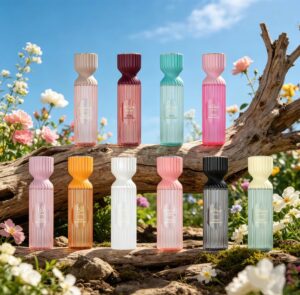
A retailer can have a strong bottle concept and still launch a weak fragrance if the scent brief, raw materials, and quality gates are vague. This article explains how to turn a market idea into a custom perfume ready for scale-up, with the quality records and documentation Western buyers require.
A commercial scent starts with a clear olfactory brief
A useful brief begins with the shopper, not a list of fashionable ingredients. State the wearer, use setting, price position, and desired feeling, then define a floral, fruity, woody, oriental, fresh, or unisex direction. Once those criteria are concrete, buyers can compare custom perfume manufacturers on evidence rather than slogans.
The note pyramid gives a team shared language. Top notes create the first impression, middle notes carry the recognizable character, and base notes provide depth. Citrus, bergamot, mint, and rosemary can lift an opening; rose, jasmine, sandalwood, and cedar can shape the heart; musk, amber, and vanilla can anchor the dry-down.
Map the scent family to the shelf
Season and channel should narrow the family without making the assortment predictable. Bright citrus or aquatic profiles can support spring and summer, while woods, amber, or spice can warm an autumn edit. For a supermarket, pair a scent name with a benefit such as fresh, soft, clean, or warm.
Specify the raw material role
The natural essential oils bring about the botanical note, while the aroma chemicals could be used to improve diffusion, stability, and a modern note. Have the lab explain the functions of the materials, their grade, whether they are potential allergens, and how they affect odor and color.
*Scent family and note pyramid: what the customer should smell first, next, and last.
*Concentration and format: Parfum, EDP, EDT, EDC, mist, sample, or gift set.
*Market file: target countries, restricted ingredients, labels, and shipping.

Formulation turns notes into a stable formula
A formula is ready for scale-up only when smell and physical behavior agree. Evaluate the concentrate in its alcohol or solvent system, check color and clarity, and compare blotters as it ages. Controlled maturation lets the note layers settle into a smoother transition.
Yiwu Yazhi Cosmetics provides custom fragrance solutions that connect raw-material screening, stability testing, and compliance verification. Its in-house laboratory maintains more than 1,000 mature formulas across floral, fruity, woody, oriental, and unisex families, giving buyers a practical starting point for original development.
Natural oils and aroma chemicals need different checks
Naturally derived oils will differ depending on the source and their method of storage; therefore, documentation is essential. Even aroma chemicals require consideration of their purity, smell, stability, and regulatory requirements. Evaluate the final mix as a system since an aesthetically pleasing component may destabilize the product.
Concentration, solvent, and aging set expectations
Concentration changes feel and staying power: a denser load supports a richer dry-down, while EDT or mist feels lighter. Commercial aging commonly takes 15 to 30 dark, controlled days; confirm the selected formula with stability data.
| Stage | What to lock | Quality gate | Retail payoff |
| Brief | Scent family, audience, concentration, format | Approved blotter and reference | Clear shelf story |
| Formula | Natural oils, aroma chemicals, solvent ratio | Stability and compatibility checks | Repeatable scent |
| Pilot | Fill, crimp, spray and pack settings | Vacuum and leakage test | Fewer returns |
| Release | Allergen file, label, transport documents | Market compliance review | Lower launch risk |
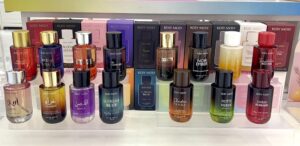
The production line protects the customer promise
Scale-up is where a promising sample becomes a commercial product or costly rework. A disciplined perfume manufacturing flow links the approved formula, weighed materials, mixing, maturation, filtration, filling, crimping, coding, packing, and release testing. Good perfume manufacturing keeps the same formula version and packaging specification at every handoff.
Yiwu Yazhi Cosmetics operates GMPC and ISO22716-aligned facilities with more than 40 production lines and reports daily output above 800,000 pieces. A capable perfume manufacturer must reproduce the agreed scent, fill volume, spray, and pack at scale.
Where vacuum testing matters
Vacuum testing is a valuable leak screen for a filled fragrance pack. It can reveal weak crimping, a damaged gasket, a loose pump, or a cap that does not seal before cartons leave the line. Combine it with fill-weight, spray, visual, and transport checks. A perfume manufacturer should treat the pack and liquid as one system.
Allergen and market gates prevent late surprises
Allergen control should begin when the formula is selected. Map each declarable fragrance allergen to the target market, keep the ingredient declaration synchronized with the formula version, and confirm the required label language and safety file. A fragrance manufacturer should provide a current market-specific review instead of reusing an old label.
*Ingredient and allergen declaration matched to the final formula version.
*Stability, compatibility, and finished-pack checks recorded by batch.
*SDS/MSDS and transport classification prepared for the destination market.
Newness belongs in the brief, not after launch
Newness is a design constraint, not a last-minute decoration. A buyer can ask for a seasonal drop, compact discovery format, body-mist extension, or layered scent pairing while the formula and pack are still flexible. The team can then test whether the idea has a clear olfactory difference and realistic cost position.
Use trends as a direction, not a copy brief. Describe an ownable effect such as bright citrus over transparent woods, soft vanilla, or clean skin musk. Yiwu Yazhi Cosmetics adds new formulas during the year. A fragrance manufacturer should explain how that direction becomes a distinct formula.
The takeaway for a first production brief
A sellable custom perfume aligns the scent family, raw materials, concentration, aging, vacuum testing, and allergen file. Document these decisions before sampling, then share the shopper, format, market, and forecast for a focused brief.
For teams evaluating custom perfume manufacturers, Yiwu Yazhi Cosmetics connects formula, packaging, production, and export compliance in one path. Compare each perfume manufacturer on evidence, not promises.
FAQ
How should a retailer describe a scent idea?
Use a scent family, three to five reference notes, the intended wearer, the season, and the desired dry-down. Describing the effect and use context gives a perfumer more direction than a single celebrity or competitor reference.
Why is vacuum testing included in perfume production?
It helps screen the filled pack for leaks caused by the pump, gasket, crimp, or closure. It should sit beside fill, spray, visual, and compatibility checks rather than replace them.
What should a fragrance manufacturer check for allergens?
Check the final formula against the rules of each target market, keep the allergen declaration synchronized with the formula version, and confirm label language and safety documents before artwork approval. A fragrance manufacturer should also retain the supporting ingredient records.