How Perfume Is Made in a Modern Factory
 စာရေးသူ
A perfume sample can smell right and still leave a buyer with questions. Will the bulk order smell the same? Will the pump leak in transit? Getting from that sample to a saleable bottle takes more than mixing fragrance with alcohol. Here is how perfume is made in a modern factory, and where the checks that matter to a wholesale order fit into the work.
The Brief Turns a Scent Idea Into a Formula
Before anyone weighs ingredients, the factory needs a usable brief. A light body mist and a woody men’s eau de parfum ask for different formulas. The buyer should describe the intended customer, scent direction, concentration and packaging, along with the market where the product will be sold.
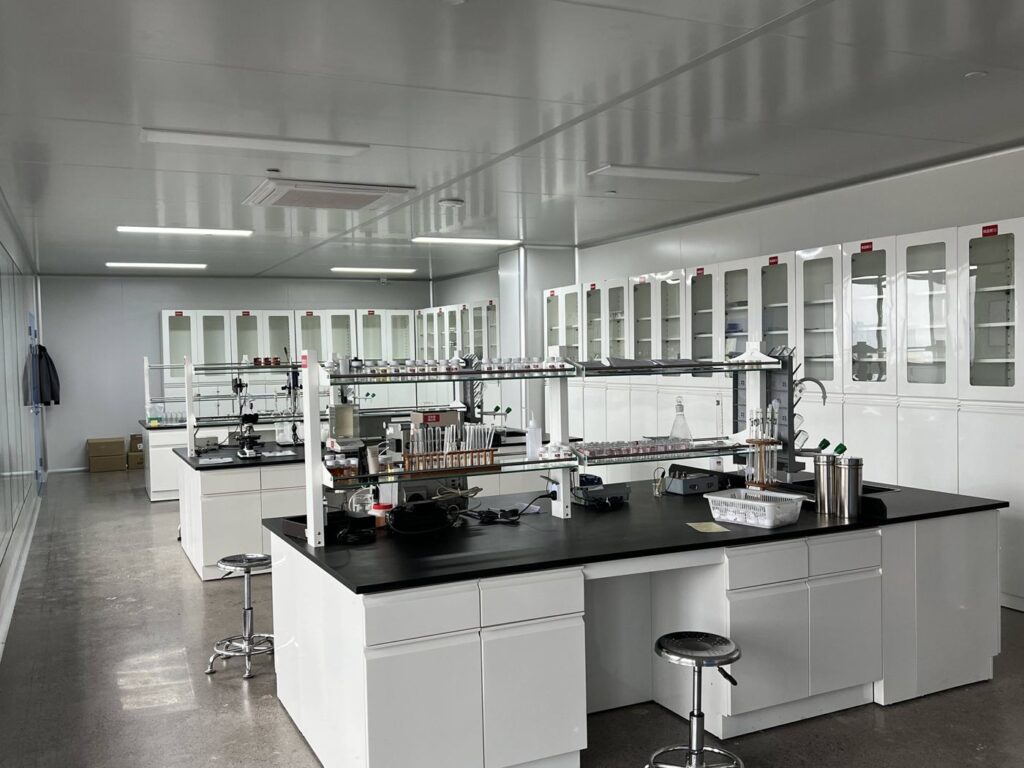
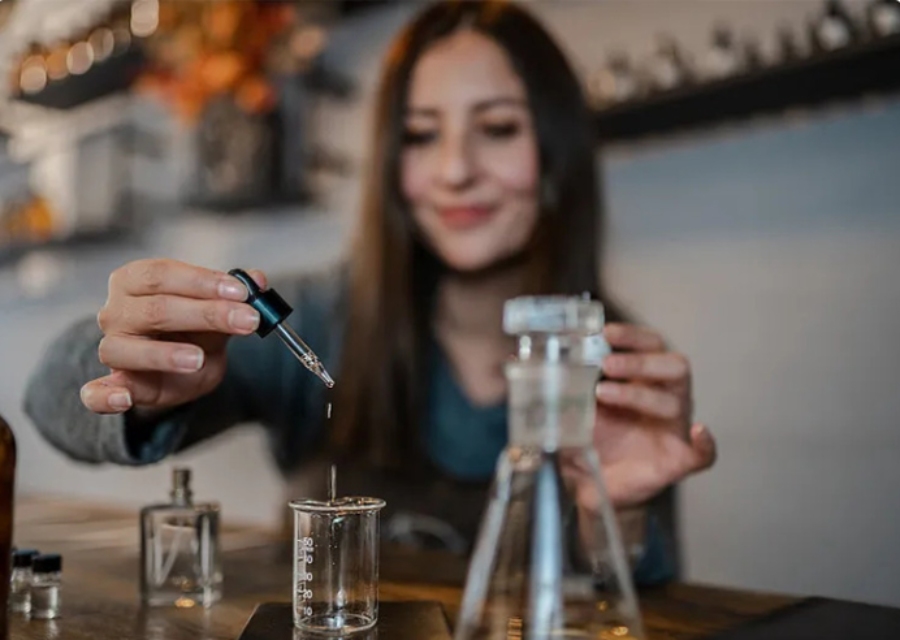
At Yiwu Yazhi Cosmetics, our in-house fragrance R&D laboratory develops top, middle and base notes, custom scents and designer-inspired profiles. Sampling gives the buyer a chance to judge how these choices work together. A request such as ‘less sweet after the opening’ is more useful for the next trial than simply asking for a better perfume.
Raw Materials Shape the First Quality Decision
The raw materials for perfume production vary with the formula. They can include fragrance concentrates, aroma chemicals, natural extracts, alcohol, purified water and, where needed, colorants. Incoming checks look for problems before those materials enter a batch. An unexpected odor or a change in color deserves attention at this stage.
Packaging needs its own checks. A bottle may look suitable in a photograph yet work poorly with the chosen pump. Buyers should try the spray and cap on an assembled sample; judging the glass alone leaves part of the product untested.
Blending and Aging Give the Scent Its Shape
For an alcohol-based perfume, blending brings the concentrate, alcohol, water and any other specified ingredients together in measured amounts. The operator follows the approved formula. A small weighing error can alter the scent balance, so a bulk batch needs to be compared with the agreed sample before it proceeds.
The blended liquid may then rest under controlled conditions, protected from light. This stage is often called aging or maturation. Its length depends on the formula; there is no single waiting period that suits every fragrance. The useful question for a buyer is how the factory decides that the batch is ready for filtration and filling.
Filtration Protects Clarity
Filtration removes particles and material that has come out of solution. Some formulas are chilled before filtering to help remove substances that could otherwise cause haze at lower temperatures. Clear liquid is the immediate aim. It still needs stability assessment, since filtration alone cannot establish how a perfume will behave throughout storage.
Before the liquid reaches the perfume production line, check that the production plan covers these points:
- Sample approval: identify the formula and concentration agreed for the order.
- Incoming materials: confirm that the liquid ingredients and packaging have passed their checks.
- Batch readiness: allow time for resting, filtration and inspection before filling starts.
| Stage | What happens | Why it matters |
| Formula development | Notes, concentration, and market fit are set | Keeps the scent idea practical |
| Material screening | Liquid and packaging inputs are checked | Reduces odor, color, and compatibility risk |
| Blending and aging | Bulk liquid is mixed and rested | Allows the batch to rest before further checks |
| Filtration | Clouding and particles are controlled | Protects clarity before filling |
| Filling and testing | Bottles are filled, sealed, and checked | Helps catch fill and seal problems |
The Filling Line Has to Protect the Formula
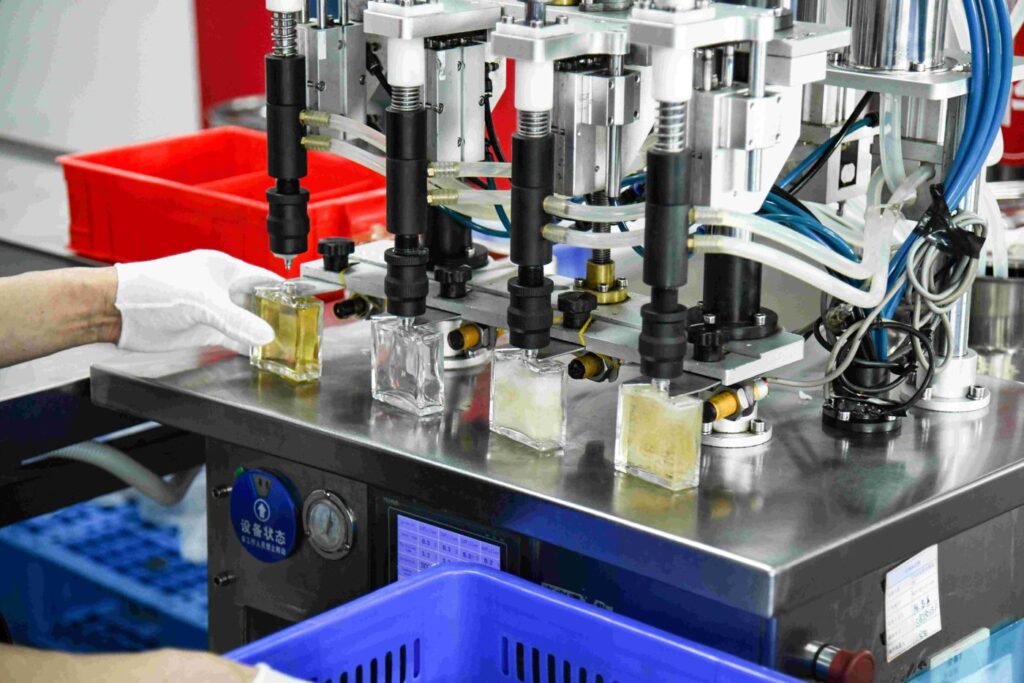
On the filling line, the liquid goes into bottles, pumps are fitted, and caps, labels and batch codes follow. Each operation has a different failure to catch. An incorrect fill may be visible straight away; a poor seal may only become obvious later.
A vacuum leak test can help expose weak seals after filling. This is relevant to bottles travelling through pressure changes on long shipping routes. The test does not reproduce every transport condition, but it gives the factory a chance to catch leakage before wet cartons or damaged labels become the buyer’s problem.
Compliance Checks Keep Custom Orders Market Ready
For custom orders, the destination market belongs in the formula discussion from the start. Ingredient restrictions and allergen labeling requirements can affect what goes into the bottle and what must appear on its label. Safety data sheets, or SDS, and transport information also need attention where applicable. Printing the packaging before this review is complete risks avoidable rework.
Terms such as ‘clean fragrance’ and ‘hypoallergenic’ need particular care. A marketing description does not replace ingredient review or establish that nobody will react to a product. In a ရေမွှေးထုတ်လုပ်ရေးစက်ရုံ, checking the formula while changes are still possible is easier than correcting a finished order.
New launches follow the same process. A buyer might request lavender and sandalwood, a tea or osmanthus direction, or an alcohol-free format. These requests belong in the brief, with time allowed for sampling and testing. A short seasonal sales window does not remove the need to check the finished formula and packaging.
A Practical Takeaway for Factory Evaluation
When comparing factories, ask to follow an order from its approved sample through to the packed bottle. The table shows the main stages of perfume manufacturing, but the records and samples behind those stages are what make the process useful to a buyer.
For perfume contract manufacturing, keep the approved sample available when assessing the bulk order. Compare the scent, fill, spray and packaging against what was agreed. If something differs, ask which production check addressed it. These questions give a clearer picture of the supplier’s work than line speed or an attractive bottle on its own.
အမြဲမေးလေ့ရှိသောမေးခွန်းများ
How long does perfume aging usually take?
There is no fixed duration. The formula and the factory’s process determine the resting period and the checks before release. Ask for the expected schedule for your specific fragrance, rather than assuming every perfume needs the same number of days.
Why is vacuum testing used for perfume bottles?
It helps reveal a weak seal by testing the filled bottle under reduced pressure. Catching a leak at the factory allows the assembly to be investigated before shipment. It does not replace other packaging or transport checks.
What makes a perfume factory different from a filler?
Look at the work included in the service. A filler may bottle a liquid supplied by the customer. A fuller manufacturing service can also cover fragrance development, material checks, resting, filtration and compliance support. Confirm which responsibilities your supplier actually accepts.
Where do allergen checks fit in the process?
Start during formula review, then check the information again before labels and relevant documents are finalized. Requirements depend on the destination market. Leaving this until cartons are printed can mean revising packaging that has already been paid for.
Can one factory support frequent new launches?
Yes, if sampling, ingredient supply, packaging and testing can keep pace with the launch calendar. Ask about each of these before fixing a retail date. Filling capacity alone does not tell you how quickly a new formula will be ready.